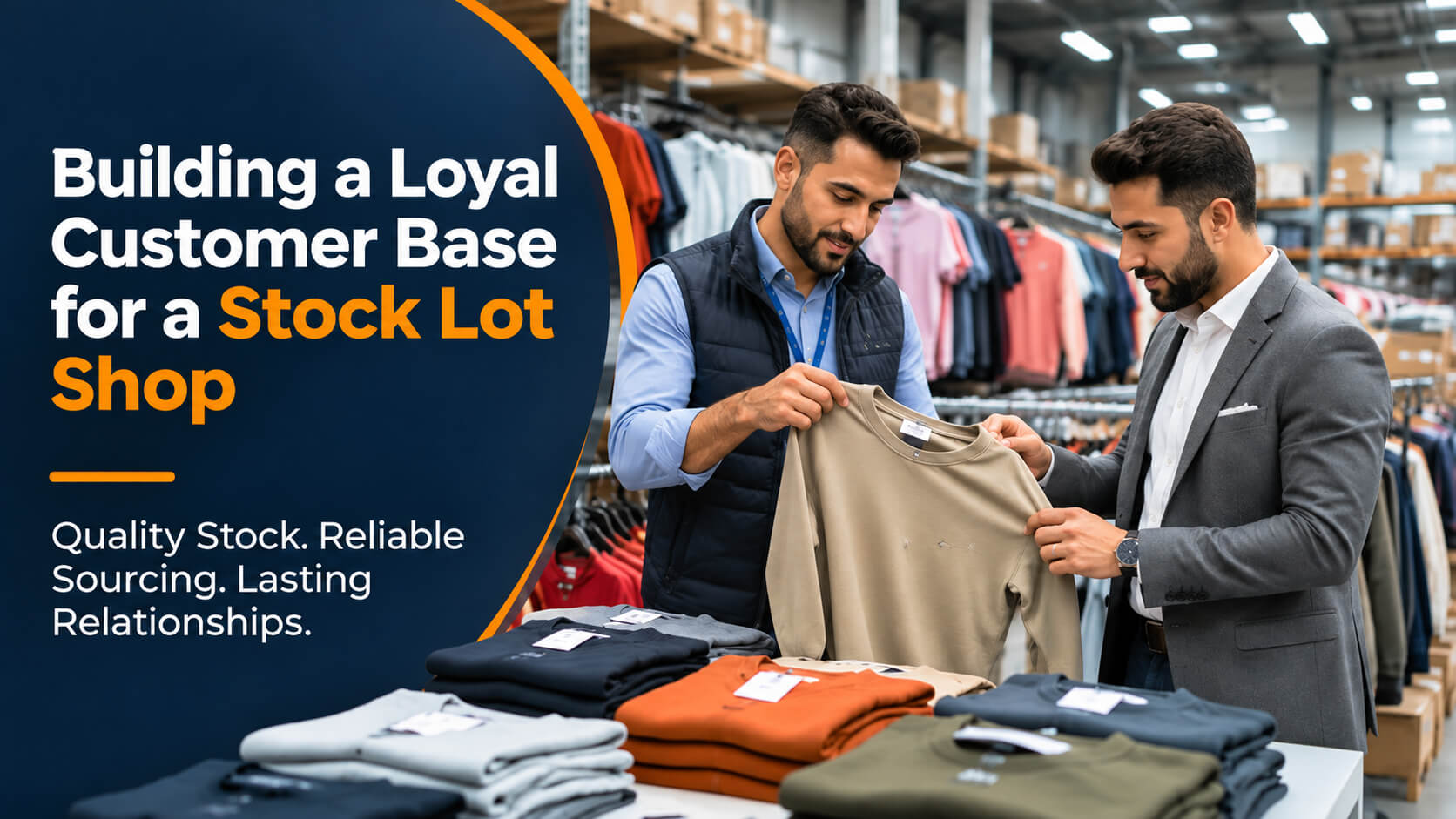
to importers and wholesalers. A retailer needs dependable stock to keep customers satisfied, while a sourcing partner needs to understand the buyer's requirements and deliver products that meet agreed specifications.
For example, a clothing retailer who repeatedly receives garments with inconsistent sizing or poor stitching may struggle to retain customers, even if the selling price is attractive. This is why choosing reliable garment suppliers in Iraq's wider sourcing market is an important part of building a sustainable clothing business.
Why Customer Loyalty Matters for a Stock Lot Clothing Business in Iraq
The success of a stock lot clothing business in Iraq depends not only on attracting new buyers but also on encouraging existing customers to purchase again. Repeat customers provide more predictable sales opportunities and help retailers develop a stronger reputation.
Here are four important reasons why customer loyalty matters.
1. Repeat Customers Create More Consistent Revenue
A business that depends entirely on new customers must continuously spend time and money attracting buyers. Returning customers already understand the products, pricing, and service, making future purchases easier.
For example, a Baghdad clothing retailer who regularly purchases affordable men's T-shirts from a trusted supplier may reorder whenever inventory becomes low. This creates a more predictable purchasing relationship for both businesses.
2. Loyal Customers Recommend Your Shop
Satisfied customers can become valuable sources of new business.
A retailer who consistently provides good-quality clothing, fair prices, and helpful service is more likely to receive recommendations from existing buyers.
Word-of-mouth recommendations are particularly useful for small clothing shops, independent boutiques, and wholesale businesses that rely on local relationships.
3. Customer Retention Reduces Marketing Pressure
Attracting new customers requires ongoing promotion through social media, advertising, and other marketing activities.
Although these activities remain important, customer retention helps businesses generate additional purchases from people who already know the brand.
Retailers can support this process through:
- Exclusive offers for returning customers.
- Regular updates about new collections.
- Personalised product recommendations.
- Referral incentives.
- Consistent customer communication.
4. Strong Customer Relationships Improve Business Stability
Fashion preferences change, and clothing retailers frequently face competition from other sellers.
A business with loyal customers has an advantage because its relationships are not based entirely on price. Customers may continue purchasing because they trust the retailer's product selection, recommendations, and service.
For this reason, clothing shop customer retention should be treated as an ongoing business strategy rather than a short-term marketing campaign.
Understanding What Clothing Customers in Iraq Want
Before introducing customer loyalty strategies, clothing retailers must understand their target customers.
Iraq has a diverse retail environment. Shopping preferences can vary between Baghdad, Erbil, Basra, Mosul, Najaf, and other commercial areas. A retailer serving an urban fashion market may have different purchasing requirements from a wholesaler supplying smaller independent shops.
Understanding these differences helps businesses choose suitable products and build stronger customer relationships.
Affordable Clothing Without Compromising Quality
Price is an important consideration for many clothing buyers. However, affordable clothing does not necessarily mean customers will accept poor-quality products.
Retailers should focus on finding a balance between:
- Fabric quality.
- Stitching and finishing.
- Accurate sizing.
- Product durability.
- Competitive selling prices.
For stock lot retailers, product grading and transparent descriptions are especially important.
Customers should understand whether garments are new surplus stock, excess production, cancelled-order inventory, or another type of stock lot.
Clothing Styles That Match Local Preferences
A successful clothing retailer should select products based on the customers it serves.
Some potentially relevant categories for Iraqi retailers include:
- Men's casualwear and everyday clothing.
- Women's dresses, blouses, and modest fashion.
- Children's clothing and everyday essentials.
- T-shirts, polo shirts, and knitwear.
- Denim, trousers, and outerwear.
- Seasonal summer and winter collections.
These categories should be tested against actual customer demand rather than treated as a guaranteed sales ranking.
Seasonal Shopping Behaviour
Seasonal planning can help clothing shops maintain relevant inventory.
Retailers should consider:
Summer collections: Lightweight fabrics, T-shirts, casualwear, and breathable garments.
Winter collections: Sweatshirts, sweaters, jackets, and heavier clothing.
Ramadan and Eid: Clothing suitable for family gatherings, celebrations, and special occasions.
Back-to-school periods: Children's clothing and practical everyday garments.
Planning purchases ahead of important shopping periods helps retailers avoid unnecessary stock shortages and rushed sourcing decisions.
What Makes Customers Return to a Clothing Shop?
Customers are more likely to return when they consistently experience:
- Products that match their expectations.
- Fair and transparent pricing.
- Suitable sizes and clothing options.
- Friendly customer service.
- Convenient purchasing and delivery.
- Reliable complaint handling.
A retailer should regularly ask customers what they like, what they want to see in future collections, and what problems they experience when shopping elsewhere.
These conversations provide useful information for future buying decisions.
10 Effective Strategies to Build Customer Loyalty in a Clothing Shop
Learning how to build customer loyalty in a clothing shop requires a combination of product management, communication, service quality, and reliable sourcing.
The following strategies can help stock lot retailers develop stronger customer relationships.
1. Maintain Consistent Clothing Quality
Product quality is one of the strongest foundations of customer loyalty.
A customer who purchases a garment expecting good fabric and proper stitching will feel disappointed if the product does not meet those expectations.
Retailers should inspect incoming garments before displaying or selling them.
Important inspection points include:
- Fabric composition and condition.
- Stitching and seam finishing.
- Zippers, buttons, and other accessories.
- Size labels and measurements.
- Colour consistency.
- Visible stains, tears, or defects.
For wholesale purchases, quality inspection should ideally take place before shipment rather than after the entire order reaches the retailer.
Professional advice: Always request product specifications and inspect samples when possible. For larger stock lot purchases, agree on the acceptable quality standard and inspection process before confirming the order.
2. Offer Competitive and Transparent Pricing
Customers appreciate fair pricing, but constantly reducing prices is not a sustainable retention strategy.
Retailers should calculate the actual cost of purchasing, importing, storing, and selling garments before deciding their prices.
Consider offering:
- Discounts on qualifying bulk purchases.
- Special offers for regular customers.
- Seasonal promotions.
- Bundle pricing for selected products.
- Rewards for repeat purchases.
A transparent pricing structure also helps customers understand what they are paying for.
For example, a retailer may offer a better per-piece price when a wholesale customer purchases a larger quantity. This encourages repeat business while allowing the retailer to manage margins.
3. Introduce a Customer Loyalty Programme
A loyalty programme gives customers an additional reason to purchase from the same shop.
It does not need to be complicated or expensive.
A clothing shop can introduce:
- Points for qualifying purchases.
- Discounts after a specific number of orders.
- Exclusive offers for regular buyers.
- Special promotions during seasonal collections.
- Referral rewards for bringing new customers.
Example: A shop could offer a discount voucher after a customer completes five qualifying purchases.
The reward should be financially sustainable and easy for customers to understand.
4. Keep Customers Updated About New Arrivals
Customers who regularly purchase clothing often want to know when new stock becomes available.
Retailers can use digital communication channels to share relevant product updates.
Useful channels include:
WhatsApp Business: Share product photographs, availability, and new collection information with customers who have agreed to receive updates.
Facebook: Publish new arrivals, promotions, and product showcases.
Instagram: Use photographs and short videos to present clothing collections.
Email: Send occasional updates to wholesale buyers and business customers.
Avoid sending excessive promotional messages. Customers should receive relevant information rather than repetitive advertisements.
5. Provide Excellent Customer Service
Customer service can differentiate a stock lot shop from competing clothing retailers.
Staff should be trained to:
- Answer product questions accurately.
- Explain garment sizes and materials.
- Help customers compare available products.
- Communicate delivery arrangements.
- Handle complaints professionally.
- Explain exchange and return conditions.
For online orders, clear product photographs and accurate descriptions are essential.
Customers should not have to repeatedly contact a shop to find out whether an item is available or when an order will arrive.
6. Work With Reliable Garment Sourcing Partners
A retailer cannot consistently satisfy customers if its supply chain is unreliable.
Choosing suitable garment sourcing partners helps retailers maintain product standards and plan inventory more effectively.
When evaluating a sourcing company, consider:
- Its sourcing network.
- Product categories.
- Quality inspection procedures.
- Stock availability.
- Order quantities.
- Export and shipping capabilities.
- Communication and after-sales support.
For retailers interested in branded surplus apparel, Bangladesh can be an important sourcing market, particularly for knitwear, woven garments, denim, sweaters, and other ready-made clothing categories.
Spider Textile is a Bangladesh-based garment sourcing and export company specialising in branded surplus garments for international buyers. Its services include stock lot sourcing, product matching, quality inspection, and export coordination.
Working with a sourcing partner that understands your specifications can make purchasing decisions more structured and help reduce avoidable supply-chain problems.
7. Personalise the Shopping Experience
Customers appreciate businesses that understand their preferences.
Retailers can maintain simple customer records to identify:
- Frequently purchased clothing categories.
- Preferred sizes.
- Typical spending ranges.
- Previous orders.
- Frequently requested products.
For example, if a customer regularly purchases men's casualwear, the retailer can notify them when similar products become available.
Personalisation should always respect customer privacy and applicable data protection requirements.
8. Make Shopping Convenient
A convenient shopping experience encourages customers to return.
Retailers should consider:
- Simple ordering procedures.
- Accurate product photographs.
- Clear product descriptions.
- Available payment options.
- Reliable delivery arrangements.
- Easy communication.
- Clearly explained exchange and return policies.
For wholesale buyers, convenience also means providing accurate stock lists, quantity information, product specifications, and realistic delivery schedules.
9. Build Trust Through Genuine Customer Reviews
Customer reviews help new buyers understand what to expect from a clothing business.
Retailers should encourage genuine feedback after successful purchases.
Useful review topics include:
- Product quality.
- Pricing.
- Customer service.
- Order accuracy.
- Delivery experience.
Publish genuine testimonials with customer permission and respond professionally to negative feedback.
Never create fake reviews or exaggerate customer experiences. Authentic feedback is more valuable for long-term credibility.
10. Develop Long-Term Relationships With Wholesale Buyers
Wholesale customers often purchase repeatedly, making them particularly important to stock lot businesses.
A retailer can strengthen these relationships by offering:
- Regular stock availability updates.
- Priority information about new arrivals.
- Clear bulk pricing.
- Consistent product specifications.
- Reliable order communication.
- Realistic purchasing and delivery schedules.
A wholesale customer who trusts a supplier is more likely to continue purchasing and recommend the business to other retailers.
Common Challenges Facing Stock Lot Clothing Businesses in Iraq
Even businesses with good products can struggle to maintain customer loyalty when operational problems affect the shopping experience.
Understanding these challenges helps retailers make better decisions.
Strong Competition Among Clothing Retailers
Clothing retailers in commercial areas of Baghdad, Erbil, and Basra may compete with shops selling similar products at different prices.
Trying to win every customer through discounts can reduce profit margins.
Instead, retailers should differentiate themselves through quality, product selection, transparent pricing, and dependable service.
Changing Customer Purchasing Power
Customers may compare several shops before making a purchase.
Retailers can respond by offering different price ranges and selecting products that match their customers' budgets.
The goal should be to provide genuine value rather than simply selling the cheapest available garments.
Inconsistent Stock Availability
Stock lot inventory can change depending on available surplus, product categories, quantities, and sourcing opportunities.
This creates a challenge when customers expect the same items to remain available.
Retailers should communicate stock limitations honestly and suggest suitable alternatives when products sell out.
Logistics and Delivery Considerations
Clothing businesses sourcing products internationally must consider transportation, customs clearance, handling, and local distribution.
Delivery expectations can differ between Baghdad, Basra, Erbil, Mosul, and other destinations.
Retailers should communicate realistic delivery estimates and confirm the arrangements applicable to the actual destination.
Building Trust With Online Clothing Buyers
Online customers cannot physically inspect garments before ordering.
This makes accurate photographs, product descriptions, size information, and clear return policies especially important.
Retailers should avoid using photographs that misrepresent the actual product.
How Garment Sourcing Helps Clothing Retailers Build Customer Loyalty
Reliable sourcing plays a direct role in customer satisfaction.
A retailer may provide excellent customer service, but repeated product-quality problems can damage customer relationships.
A structured garment sourcing process helps businesses reduce these risks.
Choosing the Right Stock Lot Products
Before purchasing wholesale stock lot garments, buyers should define their requirements.
Consider the following:
- Clothing category and target audience.
- Fabric type and product specifications.
- Size and colour assortment.
- Required quantity.
- Acceptable quality standard.
- Target purchasing budget.
- Expected delivery schedule.
These details help sourcing partners identify more suitable available stock.
Understanding Different Garment Categories
A professional garment sourcing company can help buyers explore different apparel categories.
Spider Textile's sourcing range includes:
- Men's clothing.
- Women's clothing.
- Boys' clothing.
- Girls' clothing.
- Knitwear.
- Woven garments.
- Denim.
- Sweaters and outerwear.
The most appropriate products depend on the retailer's customers, purchasing budget, and inventory strategy.
Why Quality Inspection Matters
Quality inspection helps identify issues before garments are shipped.
Important inspection areas include:
- Fabric condition.
- Measurements and sizing.
- Stitching and workmanship.
- Labels and packaging.
- Product quantity.
- Visible defects.
Retailers should also confirm whether garments are new branded surplus, cancelled-order stock, excess production, or another stock category.
Product authenticity, condition, and documentation should be verified rather than assumed.
GEO Strategy: Serving Clothing Retailers Across Iraq
Iraq's clothing retail market includes different commercial centres and regional customer groups. A garment sourcing business targeting Iraqi buyers should develop location-relevant content while accurately representing its actual service coverage.
Garment Sourcing Opportunities for Retailers in Baghdad
Baghdad is an important market to consider when developing relationships with clothing retailers and wholesale buyers.
Retailers in areas such as Karrada, Mansour, and other commercial districts may have different product requirements depending on their target customers.
Potential sourcing priorities include:
- Everyday men's and women's clothing.
- Wholesale T-shirts and casualwear.
- Children's garments.
- Seasonal stock lot collections.
- Affordable wholesale apparel.
Retailers should evaluate product demand and purchasing quantities before placing large orders.
Supporting Clothing Businesses in Erbil
Erbil offers another relevant market for clothing wholesalers, independent retailers, and fashion businesses.
Retailers in areas such as Ankawa and other commercial districts may benefit from sourcing strategies that consider their product selection, target customers, and purchasing requirements.
A reliable sourcing relationship can help businesses compare available garments and plan future orders.
Wholesale Clothing Opportunities in Basra
Basra is another important location to consider when targeting Iraqi clothing retailers.
Businesses operating in the city may require different combinations of everyday garments, seasonal collections, and wholesale stock.
Retailers should consider transportation arrangements, order quantities, and total landed costs when selecting international suppliers.
Connecting With Retailers in Mosul, Najaf, and Karbala
Businesses in Mosul, Najaf, and Karbala can also be included in a wider Iraqi garment sourcing strategy.
Retailers in these cities should assess:
- Their main customer groups.
- Popular clothing categories.
- Available wholesale purchasing options.
- Local competition.
- Delivery and inventory requirements.
Nearby Areas and Regional Customer Coverage
Beyond major cities, retailers may operate in surrounding towns and smaller commercial communities.
Potential GEO content locations include:
- Baghdad: Karrada, Mansour, Adhamiya, and surrounding commercial districts.
- Erbil: Ankawa and nearby retail communities.
- Basra: Ashar and other commercial areas.
- Najaf: Central commercial districts and surrounding communities.
- Karbala: Local retail districts and surrounding towns.
- Mosul: Commercial neighbourhoods and surrounding areas.
These location references should be used to address the needs of relevant buyers, not to imply that Spider Textile maintains offices or physical branches in these locations.
How Much Does It Cost to Source Wholesale Stock Lot Garments for Iraq?
The cost of sourcing stock lot clothing depends on garment type, quantity, quality, supplier location, transportation, and import requirements.
There is no single price that applies to every order.
Retailers should calculate the total landed cost rather than comparing garment prices alone.
Main Factors That Affect Clothing Sourcing Costs
1. Garment purchase price
The unit price depends on the garment category, brand, material, quality, and available stock.
2. Minimum order quantity
Some suppliers offer mixed stock lots, while others require larger quantities.
3. Packaging and handling
Packaging requirements and shipment preparation can affect total expenses.
4. International freight
Transportation costs depend on shipment size, weight, origin, route, and delivery arrangements.
5. Customs duties and clearance
Applicable charges depend on the garment's customs classification, declared value, current regulations, and import arrangements.
6. Local transportation
Final delivery to the buyer's warehouse or shop should also be included.
How to Calculate the Actual Cost Per Garment
Use this simple formula:
Landed Cost Per Sellable Garment = Total Order and Import Costs ÷ Number of Sellable Garments
For example, if an order has a total landed cost of $10,000 and contains 4,000 sellable garments, the average landed cost is $2.50 per garment.
This is an illustrative calculation, not a supplier quotation.
Comparing Cheap and Reliable Garment Suppliers
| Comparison factor | Lowest-price supplier | Quality-focused sourcing partner |
| Initial price | May be lower | Depends on specifications |
| Quality verification | May be limited | Defined inspection process |
| Product information | Can vary | Clearer specifications |
| Communication | Can be inconsistent | Structured order communication |
| Long-term planning | May be difficult | Can support repeat sourcing |
| Overall value | Depends on actual quality | Depends on total landed cost and performance |
The cheapest garment is not always the most profitable option.
For example, purchasing a lower-priced garment with inconsistent sizing or visible defects can increase complaints and reduce customer satisfaction.
Important: Before confirming an international order, verify the current Iraqi customs requirements, applicable HS classification, duties, and documentation with a qualified customs broker or the relevant authorities. Do not rely on generic online duty estimates.
Common Mistakes Clothing Retailers Should Avoid
Even experienced retailers can make sourcing and customer retention mistakes. The following problems deserve particular attention.
Choosing Suppliers Based Only on Price
A very low quotation may not include the same fabric quality, garment specifications, or inspection standards as another supplier. Compare equivalent products rather than choosing the cheapest offer immediately.
Ignoring Minimum Order Quantities
A large minimum order may create unnecessary inventory pressure for a small clothing retailer. Choose quantities that match your actual sales capacity.
Skipping Samples and Quality Verification
Product photographs cannot fully demonstrate fabric feel, measurements, stitching, or finishing. Request samples when available and establish inspection requirements before purchasing.
Ordering Too Much Seasonal Stock
Fashion demand changes, and seasonal garments can become difficult to sell after their relevant period. Use previous sales information to estimate purchasing quantities.
Making Promises You Cannot Keep
Do not promise guaranteed stock availability, delivery dates, or product quality without confirming the details. Honest communication protects long-term business relationships.
Ignoring Customer Complaints
A complaint can reveal a problem that affects many customers. Respond quickly, investigate the issue, and take corrective action.
Prevention and Maintenance Tips for Long-Term Customer Loyalty
Building customer loyalty is an ongoing process. Retailers should regularly review their products, suppliers, and customer relationships.
Here are practical maintenance recommendations.
Maintain a Regular Quality Inspection Routine
Check incoming stock before making products available to customers. Maintain separate records for defective, damaged, and sellable garments.
Monitor Popular Products and Sizes
Review sales every month to identify: best-selling clothing categories, popular sizes, frequently requested colours, slow-moving inventory, and seasonal demand changes. This information helps retailers make more informed purchasing decisions.
Maintain Reliable Supplier Relationships
Evaluate sourcing partners based on product consistency, communication, inspection procedures, and delivery performance. Keep records of previous orders to identify recurring problems.
Communicate With Returning Customers
Share relevant new arrivals and promotions with interested customers. Ask for feedback and use it to improve product selection.
Review Customer Satisfaction Regularly
Monitor repeat purchase rates, complaints, reviews, and customer feedback. A simple monthly review can help identify problems before they become major business issues.
Why Choose Us for Garment Sourcing in Iraq?
Choosing the right sourcing partner is an important decision for clothing retailers, wholesalers, and importers.
Spider Textile is a Bangladesh-based garment sourcing company that connects international buyers with garment manufacturers and branded surplus stock opportunities in Bangladesh.
The company focuses on sourcing, product matching, quality inspection, and export support to help buyers manage their garment purchasing requirements.
Branded Surplus Stock Lot Sourcing
Spider Textile specialises in sourcing branded surplus garments from export-oriented garment factories in Bangladesh.
Its sourcing categories include men's, women's, and children's clothing, along with knitwear, woven garments, denim, sweaters, and outerwear.
This gives international buyers an opportunity to explore different apparel categories based on their requirements.
Product Matching Based on Your Requirements
Every clothing business has different purchasing needs.
Spider Textile works with buyers to match available products based on:
- Preferred garment category.
- Brand requirements.
- Size ratios.
- Colour assortment.
- Required quantity.
- Target purchasing price.
This helps buyers evaluate more relevant stock options instead of relying on general product listings.
Quality Inspection and Verification
Product quality is important for maintaining customer satisfaction.
Spider Textile describes its inspection process as covering workmanship, measurements, fabric quality, trims, labels, packaging, and quantity.
Having clear inspection requirements before shipment can help buyers reduce the risk of receiving products that do not match agreed specifications.
Support With International Garment Exports
International sourcing involves more than identifying garments.
Spider Textile also supports export coordination, shipment arrangements, and relevant export documentation.
Buyers should confirm the applicable shipping terms, destination requirements, and commercial conditions before placing an order.
Support for Different Order Requirements
Depending on product category and manufacturer, Spider Textile works with orders ranging from smaller mixed lots to larger-volume purchases.
This can help different types of international buyers explore suitable sourcing arrangements.
A Focus on Long-Term Business Relationships
Reliable communication and transparent purchasing arrangements are essential for repeat business.
Spider Textile aims to support international buyers through product matching, quality assurance, shipment coordination, and after-sales communication.
For Iraqi retailers and wholesalers interested in sourcing branded surplus garments from Bangladesh, discussing product requirements directly with the sourcing team is a practical starting point.
Build a Stronger Clothing Business With Reliable Garment Sourcing
Building a loyal customer base for a stock lot shop requires a long-term commitment to product quality, fair pricing, customer service, and reliable inventory.
Retailers in Baghdad, Erbil, Basra, Mosul, Najaf, and other Iraqi markets should focus on understanding their customers, selecting suitable clothing collections, and building dependable supplier relationships.
The right garment sourcing strategy can support these goals by helping retailers access suitable products, maintain quality standards, and make more informed purchasing decisions.
If you are a clothing retailer, wholesale buyer, or importer looking for branded surplus garments from Bangladesh, Spider Textile can help you explore available sourcing opportunities.
Ready to explore wholesale stock lot garments from Bangladesh?
Visit Spider Textile to learn about garment sourcing services, explore available stock, and discuss your requirements with the sourcing team.
Contact Spider Textile today to start building a more reliable garment supply chain for your clothing business.
Internal Linking Suggestions
Use these anchor texts naturally within the article to connect readers with relevant service pages and supporting blog content.
| Anchor text | Suggested internal destination |
| Branded surplus stock lot sourcing | Main garment sourcing service page |
| Wholesale stock lot garments | Lot Deals page |
| Garment sourcing services in Bangladesh | Main service page |
| Quality inspection and verification | Quality assurance or How We Work page |
| Ready-made garments export | Garment export service page |
| Men's and women's surplus clothing | Relevant product category pages |
| Children's garment sourcing | Children's clothing category |
| How to import clothes to Iraq | Supporting import guide |
| Best countries to import clothes to Iraq | Supporting sourcing guide |
| Explore available stock | Lot Deals page |
Frequently Asked Questions About Stock Lot Clothing and Customer Loyalty in Iraq
1. How can a stock lot shop build customer loyalty in Iraq?
A stock lot shop can build customer loyalty in Iraq by offering consistent garment quality, competitive prices, reliable stock availability, and helpful customer service.
2. Where can Iraqi retailers find wholesale stock lot garments?
Iraqi retailers can source wholesale stock lot garments from verified international garment sourcing companies, export-oriented manufacturers, and established wholesale suppliers in markets such as Bangladesh, Turkey, and China.
3. Why is garment quality important for clothing shop customer retention?
Garment quality is important because customers are more likely to purchase again when clothing matches the advertised specifications, condition, sizing, and quality expectations.
4. Can a garment sourcing company in Bangladesh supply clothing to Iraq?
Yes, a Bangladesh-based garment sourcing company can coordinate international garment sourcing and exports to Iraqi buyers, subject to agreed shipping arrangements and applicable import requirements.
5. What should Iraqi clothing retailers check before buying stock lot garments?
Iraqi clothing retailers should check garment condition, fabric quality, sizing, quantity, product specifications, supplier reliability, inspection arrangements, and total landed cost before confirming an order.
6. How much does it cost to import wholesale clothing into Iraq?
The cost of importing wholesale clothing into Iraq depends on garment prices, order quantities, freight, insurance where applicable, customs duties, clearance charges, and local transportation.
7. How can Spider Textile help clothing retailers in Iraq?
Spider Textile helps international clothing buyers source branded surplus garments from Bangladesh through product matching, quality inspection, stock lot sourcing, and export coordination.