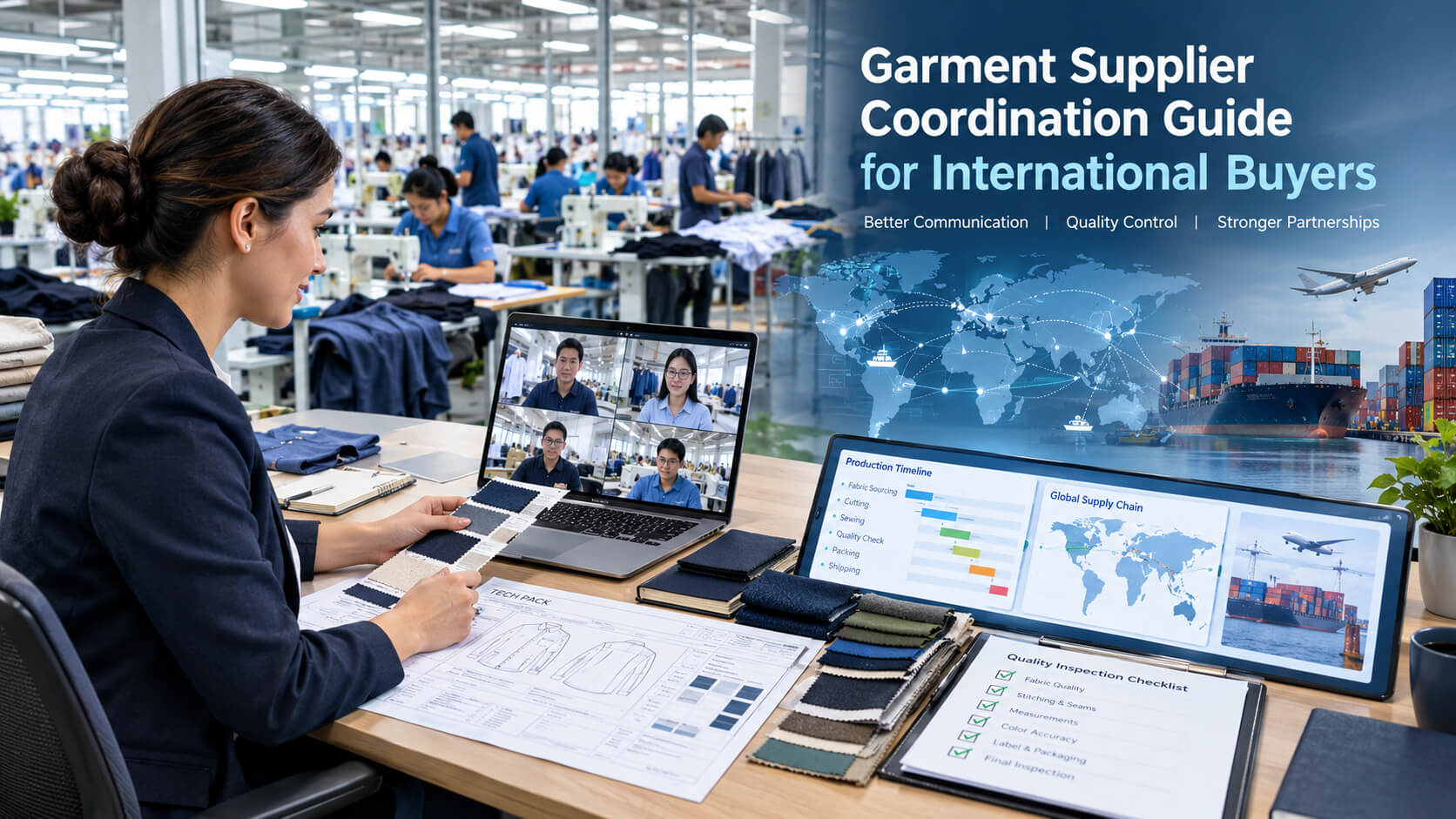
Managing overseas production requires more than finding a factory with competitive pricing. International apparel buyers must coordinate specifications, timelines, quality expectations, and communication processes across different countries, languages, and business cultures.
Effective garment supplier coordination helps brands avoid common problems such as incorrect samples, delayed approvals, fabric issues, missed shipping windows, and unexpected production changes. A structured supplier management system allows sourcing managers, fashion brands, and import businesses to maintain visibility from product development through final shipment.
This guide explains how to build a reliable coordination process with clothing manufacturers, improve communication, manage production milestones, and reduce risks when manufacturing garments overseas.
Direct Answer: Garment supplier coordination is the process of managing communication, production schedules, quality standards, and shipment requirements between apparel buyers and clothing manufacturers. International buyers can improve coordination by using clear product specifications, approved samples, production tracking systems, factory audits, and pre-shipment inspections before goods leave the factory.
What Is Garment Supplier Coordination?
Garment supplier coordination is the structured process of working with apparel manufacturers to ensure products are made according to approved specifications, delivered on schedule, and meet required quality standards.
For international buyers, coordination typically involves:
- Sharing accurate product specifications
- Reviewing samples and approving revisions
- Managing fabric and trim sourcing
- Tracking production milestones
- Monitoring quality control checkpoints
- Confirming packaging and shipping requirements
- Maintaining regular communication with factories
Unlike simple supplier communication, effective coordination creates a repeatable operational system. It ensures that everyone involved from designers and sourcing teams to factory managers and logistics providers understands their responsibilities.
Why Is Garment Supplier Coordination Important for International Buyers?
What problems does supplier coordination solve?
Poor coordination can create expensive issues throughout the apparel supply chain.
Common challenges include:
| Challenge | Potential Impact |
| Unclear product specifications | Incorrect garments or costly revisions |
| Delayed sample approvals | Missed production schedules |
| Fabric quality problems | Rejected inventory and financial losses |
| Poor factory communication | Unexpected production changes |
| Lack of milestone tracking | Late shipments |
| Unauthorized subcontracting | Quality and compliance risks |
International buyers often work with suppliers thousands of miles away. Small misunderstandings that might be corrected quickly with a local manufacturer can become major delays when production happens overseas.
A strong coordination process creates accountability before problems become expensive.
How to Coordinate with Overseas Garment Suppliers Step by Step
1. Create a Complete Product Specification Package
The first step in successful apparel production management is ensuring the manufacturer has complete product information before production begins.
A professional specification package should include:
- Product drawings or design references
- Fabric composition and weight requirements
- Color standards
- Size measurements
- Stitching details
- Label and packaging requirements
- Quality expectations
- Delivery deadlines
One of the most important documents is a tech pack for clothing manufacturers.
A tech pack acts as a technical blueprint for garment production. It reduces interpretation errors by clearly documenting every detail needed to manufacture the product.
A complete tech pack usually includes:
- Flat sketches
- Measurement charts
- Material details
- Construction instructions
- Bill of materials (BOM)
- Artwork placement
- Revision history
Practical Example: A buyer ordering cotton hoodies should not only specify "heavyweight cotton hoodie." The supplier needs details such as fabric weight, cotton blend percentage, hood construction, rib specifications, print placement, stitch requirements, and packaging instructions. The more precise the information, the fewer production corrections are needed later.
2. Establish Clear Clothing Manufacturer Communication Processes
How should buyers communicate with garment factories?
Effective clothing manufacturer communication requires consistency, documentation, and defined approval processes.
Recommended practices:
Use written communication for important decisions
Avoid relying only on phone calls or messaging apps. Confirm important decisions through documented channels.
Record:
- Approved samples
- Fabric changes
- Timeline adjustments
- Quality decisions
- Packaging updates
Assign clear points of contact
A typical communication structure may include:
| Buyer Team | Factory Team |
| Product developer | Merchandising manager |
| Quality manager | Quality control supervisor |
| Sourcing manager | Production manager |
| Logistics coordinator | Export department |
Clear ownership prevents situations where everyone assumes someone else handled an issue.
3. Build a Production Timeline With Factory Milestones
How can buyers prevent garment production delays?
Managing garment production lead times requires tracking each production stage rather than waiting for the final delivery date.
A typical garment production timeline includes:
- Product inquiry and quotation
- Sample development
- Sample review and approval
- Material sourcing
- Pre-production confirmation
- Cutting and sewing
- Quality inspection
- Packing
- Shipment preparation
Create milestone checkpoints for:
- Sample completion date
- Fabric approval date
- Production start date
- Mid-production quality review
- Final inspection date
- Shipping date
A production calendar helps buyers identify delays early when corrective action is still possible.
4. Use Quality Control Checks Throughout Production
Why should quality checks happen before shipment?
Waiting until products are finished creates limited options. Quality management should happen throughout the manufacturing process.
Important checkpoints include:
Pre-production inspection
Verify:
- Approved fabric availability
- Correct trims
- Production instructions
- Factory readiness
During-production inspection
Check:
- Stitch quality
- Measurements
- Construction consistency
- Defect rates
Pre-shipment inspection apparel buyers should consider
A pre-shipment inspection apparel process verifies finished goods before they leave the factory.
Common inspection points include:
- Product appearance
- Measurements
- Color consistency
- Packaging accuracy
- Label placement
- Quantity verification
Pre-shipment inspection is especially valuable for large orders where correcting issues after shipment becomes expensive.
5. Conduct Factory Audits Before Long Term Partnerships
What should buyers check during a garment factory audit?
Before committing to a supplier relationship, buyers should evaluate factory capability, compliance, and reliability.
A factory audit checklist garments buyers can use should include:
| Audit Area | Key Questions |
| Production capacity | Can the factory handle required volumes? |
| Equipment | Does the facility have suitable machinery? |
| Quality systems | Are inspection procedures documented? |
| Workforce | Are staffing levels appropriate? |
| Compliance | Are required standards followed? |
| Subcontracting | Is outside production disclosed? |
Factory audits do not guarantee perfect performance, but they help identify risks before placing major orders.
6. Manage Offshore Garment Sourcing Risks
What risks should international buyers consider when sourcing overseas?
Offshore garment sourcing offers access to specialized manufacturing capabilities and competitive production costs, but it requires careful risk management.
Common risks include:
- Communication delays
- Currency fluctuations
- Changing material availability
- Shipping disruptions
- Quality inconsistencies
- Regulatory requirements
Risk reduction strategies include:
- Maintaining backup suppliers
- Approving samples before bulk production
- Documenting specifications
- Scheduling inspections
- Building realistic production timelines
The cheapest supplier is not always the lowest-cost option if delays, defects, or rework increase total expenses.
Apparel Supply Chain Management Best Practices
How can buyers improve supply chain visibility?
Strong apparel supply chain management requires visibility from raw materials to finished products.
Recommended practices:
Maintain a supplier performance record
Track:
- On-time delivery performance
- Quality results
- Communication responsiveness
- Production accuracy
- Problem resolution
Use standardized approval systems
Create documented procedures for:
- Sample approval
- Color approval
- Material approval
- Production release
Forecast demand accurately
Factories need reliable forecasts to plan:
- Fabric purchasing
- Labor allocation
- Production capacity
Better forecasting improves supplier relationships and reduces delays.
Practical Example: A Better Supplier Coordination Workflow
A small U.S. fashion brand working with an overseas clothing manufacturer can use this workflow:
Before production
- Send complete tech pack
- Confirm quotation and timeline
- Approve fabric samples
- Review prototype sample
During production
- Confirm production start date
- Receive milestone updates
- Conduct quality checks
Before shipment
- Complete final inspection
- Approve packing details
- Confirm shipping documentation
This process creates a clear chain of responsibility and reduces unexpected problems.
Common Mistakes International Apparel Buyers Make
1. Choosing suppliers only based on price
Low manufacturing costs can become expensive if quality problems or delays occur. Evaluate production capability, communication quality, quality systems, and reliability.
2. Starting production without a detailed tech pack
Factories cannot produce consistently from vague descriptions. A complete technical package reduces assumptions and prevents avoidable errors.
3. Approving samples too quickly
A rushed approval process can result in bulk production problems. Review fit, fabric behavior, construction, color accuracy, and measurements.
4. Not confirming subcontracting policies
Some factories outsource production without informing buyers. Include subcontracting requirements in supplier agreements and verify production locations when necessary.
5. Ignoring time zone differences
International teams should establish response expectations, meeting schedules, emergency contacts, and communication channels.
Expert Tips for Better Garment Supplier Coordination
Create a supplier communication schedule
Regular updates reduce uncertainty. Example: Weekly production reports, biweekly management reviews, immediate escalation for major issues.
Document every approval
Verbal agreements can create confusion. Keep records of approved samples, emails, technical documents, and inspection reports.
Build relationships, not just transactions
Factories are more likely to prioritize reliable buyers who provide accurate information, communicate professionally, plan orders realistically, and resolve issues fairly. Strong partnerships improve long-term production stability.
Frequently Asked Questions
What is garment supplier coordination?
Garment supplier coordination is the process of managing communication, specifications, production schedules, quality checks, and shipment requirements between apparel buyers and manufacturers. It ensures suppliers understand buyer expectations and deliver products according to agreed standards.
How can international buyers communicate better with clothing manufacturers?
International buyers can improve communication by using detailed product documents, assigning clear contacts, confirming decisions in writing, and scheduling regular production updates. Clear documentation reduces language barriers and prevents misunderstandings during overseas manufacturing.
How long do garment production lead times usually take?
Garment production lead times vary depending on product complexity, order quantity, fabric availability, and factory capacity. Buyers should confirm timelines directly with suppliers and include time for sampling, approvals, production, inspection, and shipping.
Why is a tech pack important for clothing manufacturers?
A tech pack provides manufacturers with detailed instructions about garment construction, materials, measurements, and quality requirements. It reduces production errors by giving factories a clear reference document throughout the manufacturing process.
Should apparel buyers conduct factory audits before placing orders?
Yes. Factory audits help buyers evaluate production capability, quality systems, compliance practices, and potential risks before committing to large orders. They are especially useful when establishing relationships with new overseas suppliers.
What is the purpose of pre-shipment inspection for apparel?
Pre-shipment inspection verifies that finished garments meet agreed quality standards before they leave the factory. It helps buyers identify defects, incorrect quantities, or packaging problems before products enter international shipping channels.
How can buyers prevent delays when manufacturing overseas?
Buyers can reduce delays by approving samples quickly, tracking production milestones, maintaining clear communication, planning realistic timelines, and conducting quality checks throughout production.
Conclusion
Successful international apparel production depends on more than selecting the right factory. It requires a reliable system for garment supplier coordination, from technical documentation and factory communication to production tracking and quality verification.
By using detailed specifications, structured communication processes, factory audits, and inspection checkpoints, apparel buyers can reduce production risks and build stronger manufacturing partnerships.
A well managed supplier relationship creates better product consistency, fewer delays, and a more predictable global sourcing operation.